
Book Your Consultation
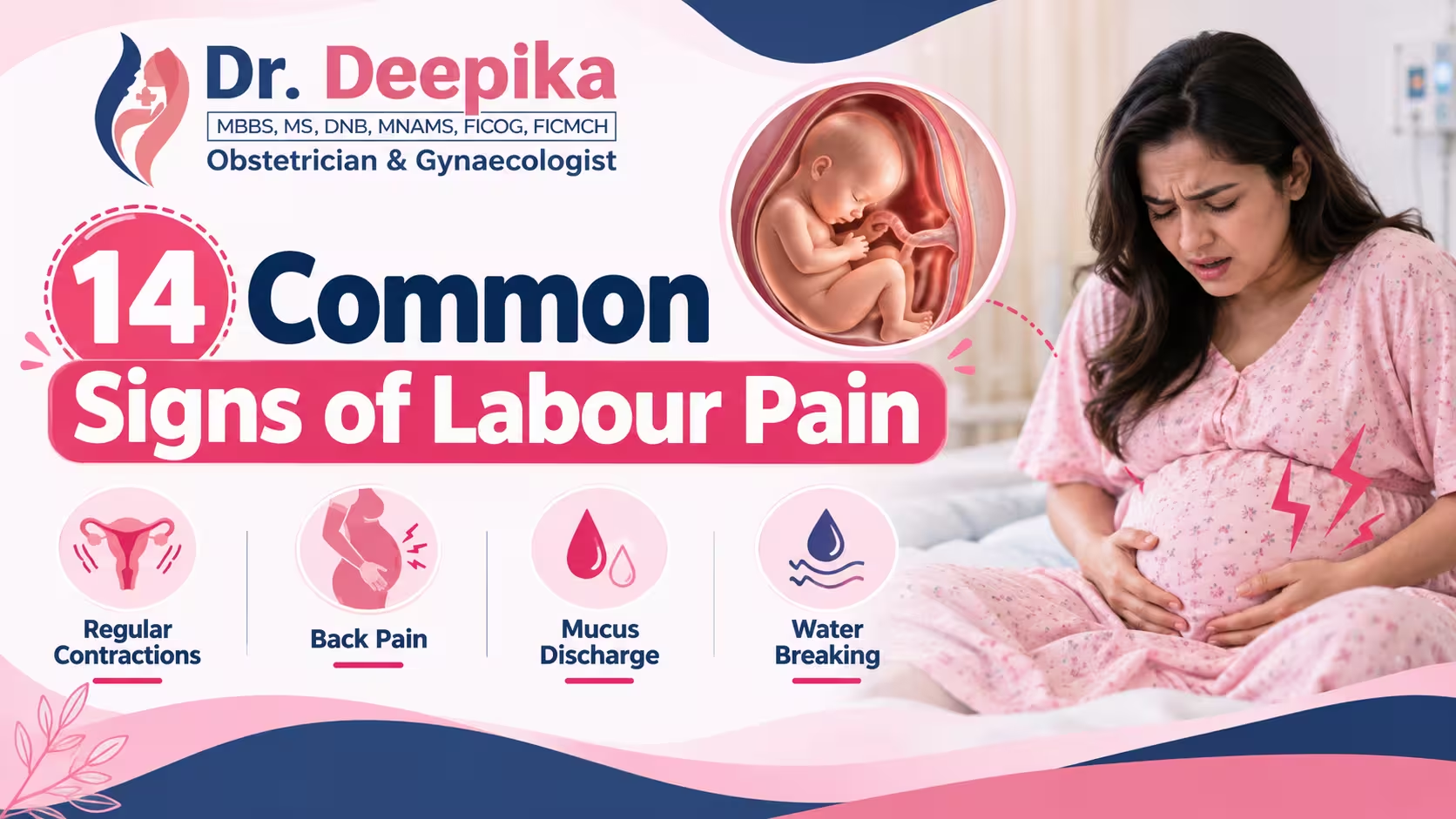
14 Common Signs of Labour Pain
Common signs of labour include regular, intensifying contractions and the rupture of the amniotic sac (water breaking). Labour pain is a natural part of childbirth as the body prepares for delivery, and the experience can vary from one woman to another. Some women may notice several signs before labour begins, while others may experience only a few. Recognising these changes can help pregnant women and their support systems understand when labour may be starting and when medical guidance may be needed.
In this blog, we will discuss 14 common signs of labour pain, how to distinguish true labour from false labour, the symptoms that may occur during the 9th month of pregnancy, and when it is important to contact your doctor or go to the hospital.
14 Common Signs of Labour Pain
Labour symptoms do not always appear in the same order or with the same intensity for every woman. Some signs may occur hours or days before active labour, while others may appear as labour progresses. The following are some common signs and symptoms that may occur as the body prepares for childbirth.
1. Baby Drops (Lightening)
As labour approaches, the baby may move lower into the pelvis. This is known as “lightening.” It may reduce pressure on the diaphragm and make breathing feel easier, while increasing pressure on the bladder and causing more frequent urination.
2. Braxton Hicks Contractions
Braxton Hicks contractions are irregular practice contractions that may become more noticeable toward the end of pregnancy. They can feel uncomfortable, but unlike true labour contractions, they generally do not follow a regular pattern or cause progressive cervical dilation.
3. Cervical Changes
Take the First Step Towards Better Women's Health Today
As labour progresses, the cervix begins to thin (efface) and open (dilate) to prepare for delivery. These changes may not always be noticeable to the woman and may be confirmed through a medical examination.
4. Bloody Show
The mucus plug may pass as the cervix begins to change. It can appear clear, pink, or blood-tinged and is commonly referred to as a bloody show.
5. Rupture of Membranes (Water Breaking)
When the amniotic sac breaks, you may notice a trickle or gush of clear or pale fluid from the vagina. If you think your water has broken, contact your maternity unit or healthcare provider for guidance, even if contractions have not started.
6. Lower Back Pain and Cramps
Some women may experience persistent lower back pain or menstrual-like cramps as labour approaches. The discomfort may begin in the back and radiate toward the lower abdomen. However, back pain can also occur normally during pregnancy, so it should be considered along with other symptoms.
7. Increased Vaginal Discharge
Take the First Step Towards Better Women's Health Today
Vaginal secretions may become thicker or more noticeable as the body prepares for labour. Increased discharge may occur along with the loss of the mucus plug.
8. Diarrhea or Loose Stools
Some women may experience loose stools or diarrhea as labour approaches. Hormonal and physical changes may contribute to this, although diarrhea can also have other causes and does not necessarily mean labour has started.
9. Increased Pelvic Pressure
As the baby moves lower into the pelvis, you may feel heaviness or increased pressure in the pelvic or vaginal area. This may also create more pressure on the bladder or rectum.
10. Nesting Instinct
Some women experience a sudden surge of energy and an urge to clean, organize, or prepare things for the baby. This is often called the nesting instinct and may occur before labour, although it cannot predict exactly when labour will begin.
11. Fatigue or Energy Shifts
Take the First Step Towards Better Women's Health Today
Toward the end of pregnancy, some women may experience sudden exhaustion or unexpected bursts of energy. These changes can occur as the body prepares for childbirth, but they do not necessarily mean that labour has started.
12. Nausea and Vomiting
Some women may experience nausea or vomiting as labour approaches or during its early stages. These symptoms can also occur for other reasons, so they should not be used alone to determine whether labour has begun.
13. Regular and Increasing Contractions
Regular contractions are one of the most important signs of progressing labour. True labour contractions generally become stronger, longer, and closer together over time and continue despite changing position or resting. The sensation may be felt in the lower back, abdomen, or both.
14. Joint Loosening
Hormonal changes, including the effects of relaxin, can cause the pelvic ligaments and other joints to become more flexible. This loosening helps prepare the pelvis for childbirth and may contribute to changes in how the body feels as labour approaches.
What Are the Symptoms of Labour Pain in the 9th Month?
Take the First Step Towards Better Women's Health Today
The 9th month can bring lots of changes to your body as it prepares for labor and delivery. Possible symptoms of labor in the ninth month may include:
- Regular contractions that become stronger, more consistent and closer together
- Increased lower back and/or abdominal pain
- Pelvic pressure
- Loss of your mucus plug (may be bloody)
- Breaking of your water (waters breaking)
- Increased vaginal discharge
- Increased urge to urinate and/or have a bowel movement
Being in your ninth month doesn’t mean every pain or contraction is labor pain. It is always best to contact your physician to be sure.
How to Tell True Labour Pain From False Labour?
Knowing the difference between false and true labour can reduce unnecessary anxiety.
|
True Labour |
False Labour |
|
Contractions become regular |
Contractions remain irregular |
|
They gradually become stronger |
They usually do not progressively intensify |
|
They become longer and closer together |
Their pattern may remain inconsistent |
|
They usually continue despite rest or position changes |
They may reduce with rest or movement |
|
Cervical changes occur |
Progressive cervical dilation does not occur |
If you are unsure whether your contractions represent true labour pain symptoms, contact your doctor rather than trying to diagnose labour at home.
Do Baby Boy Labour Pain Symptoms Differ?
The question often asked is whether there are any differences in labour pains when it comes to baby boys or baby girls. There are no medical studies indicating that the sex of the baby is related to a certain kind of pain or labour symptom.
Pain during labour depends on a number of things like contractions, the condition of cervix, baby’s position, and pregnancy of the woman herself rather than on the sex of the child.
When Should You Contact Your Doctor?
Contact your doctor or maternity unit if you experience any signs that could indicate labour, in particular if you have:
- Painful contractions which are occurring more regularly and are becoming stronger and longer
- Your water breaks
- Fluid leaking from your vagina
- Heavy vaginal bleeding
- Severe abdominal pain
- Noticeably fewer movements from your baby
- An intense urge to push
- Any signs that make you feel your baby is in any kind of distress
If your doctor has told you particular signs that mean you need to come to the hospital, follow those signs.
Conclusion
Take the First Step Towards Better Women's Health Today
Being able to recognize labour symptoms may help ease the anxiety in the last few weeks of your pregnancy. Here are some of the many possible symptoms that you should look out for.
But keep in mind that every pregnancy is unique and not everyone gets all 14 symptoms. If there’s anything you are not sure about, contact your obstetrician immediately.
If you require customized assistance in dealing with pregnancy and maternity needs, you can always seek out the expert advice of Dr. Deepika, one of the best gynecologists in Jaipur.
Frequently Asked Questions
What are the first signs of labour?
The first signs of labour may include pelvic pressure, backache, mucus discharge, contractions, and changes in vaginal discharge. Each woman has her own symptom pattern.
How does true labour pain feel?
True labour pain is caused by contractions that become regular, strong, long and close together, and continue despite resting and changing position.
What are the symptoms of true labour pain in the 9th month?
Take the First Step Towards Better Women's Health Today
The symptoms may be regular contractions, lower backache, pelvic pressure, mucus or blood discharge and breaking of water.
How to know if contractions are of true labour?
When contractions become stronger, longer and closer together, and continue to do so, then they may be of true labour. Contact your doctor for confirmation.
Are there symptoms of true labour pain of a baby boy and a baby girl different?
There are no true labour pain symptoms of a baby boy and baby girl that are different or reliable.


