
Book Your Consultation
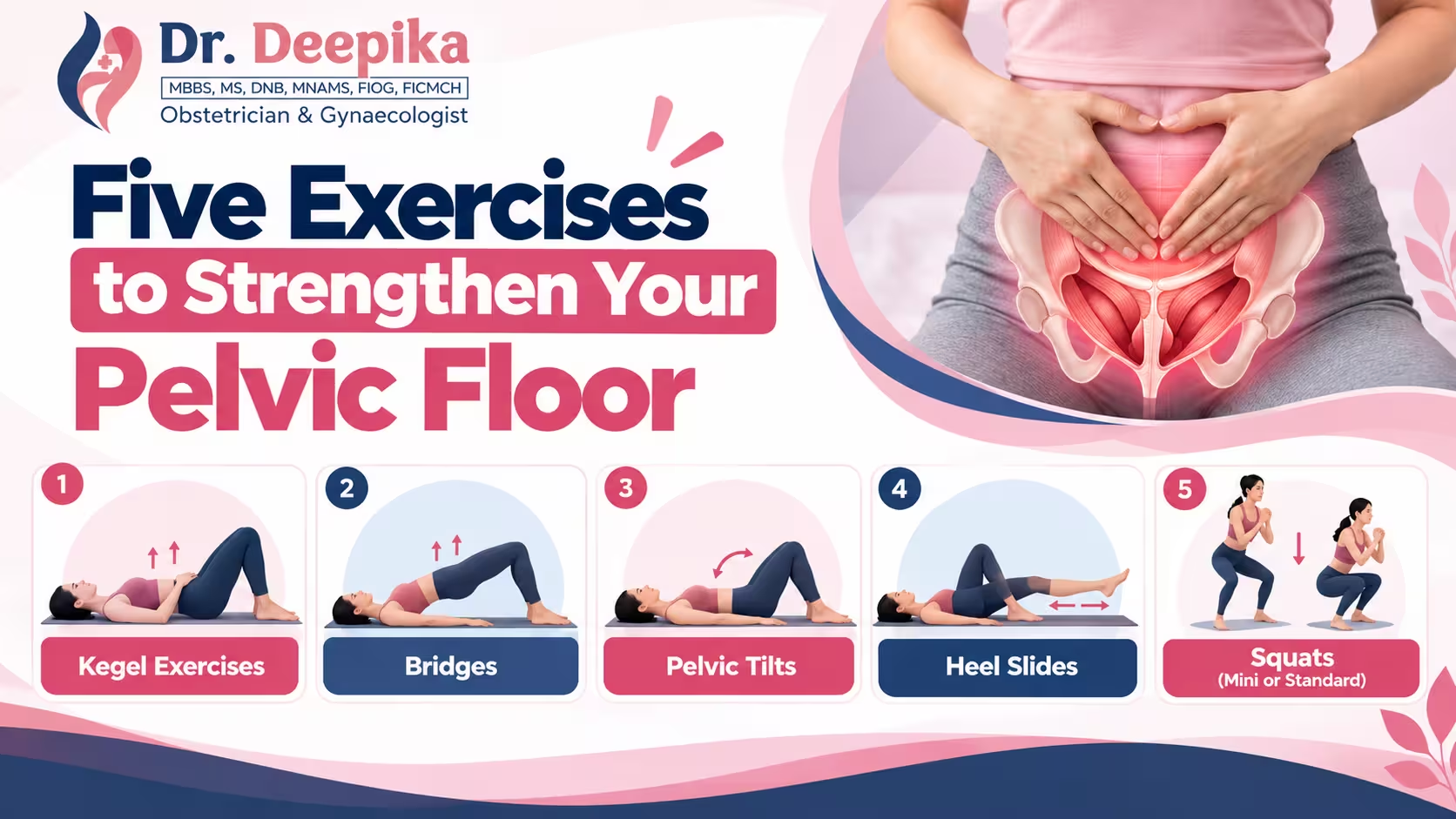
Five Exercises to Strengthen Your Pelvic Floor
Here are five effective exercises to strengthen your pelvic floor muscles, as outlined by health guides from Healthline and other medical resources: Kegel Exercises, Bridges, Pelvic Tilts, Heel Slides, and Squats (Mini or Standard).
What Do Your Pelvic Floor Muscles Actually Do?
The pelvic floor muscles serve as a type of hammock attached to the base of your pelvis from the pubic bone to the tailbone. It serves as support for your bladder, bowel, uterus in women and prostate in men and keeps them in place against the pull of gravity.
In addition, the muscles aid in bladder and bowel control. They serve in preventing leakage of the urine, gas, and stool from closing the openings and relaxing to allow regular passage. They also help in stabilizing your pelvis and low back in cooperation with the abdominal and back muscles.
Pelvic floor muscles also serve an important function in that they contract in climactic state to help in achieving arousal and relaxation of these muscles in order to avoid pain during sex. They can also aid in blood circulation by serving in moving blood to the heart.
Why Should Women Exercise Their Pelvic Floor?
The right pelvic floor exercises will make life easier for women. These exercises can assist in:
- Reducing incontinence during coughing, sneezing, laughing, and exercising
- Getting better at controlling both the bowel and bladder
- Strengthening the pelvic floor muscles after delivery once it is safe to exercise
- Holding up the pelvic organs and dealing with pelvic floor muscle weakness symptoms
- Learning how to contract and relax these muscles
However, improvement may take time and does not work the same way on everybody. It will be best to find out why the condition is present instead of just performing more reps.
Five Exercises to Strengthen Your Pelvic Floor
No fancy equipment is necessary to begin your training. The following five exercises can be done at home if they are safe for you and do not result in any pain.
1. Kegel Exercises
Take the First Step Towards Better Women's Health Today
Kegel exercises are considered to be the key exercises to train your pelvic floor muscles directly. Kegels include the gentle contraction and elevation of the muscles used to stop urination.
How to perform:
- Sit or lie down on your back and bend your knees.
- Gently contract and elevate the pelvic floor muscles.
- Hold for three to five seconds during normal breathing.
- Then relax the muscles for the same amount of time.
- Repeat up to 10 times, while comfortable.
Do not contract your thighs, buttocks, and abdominal muscles. Also, do not contract the pelvic floor muscles in order to hold the urine during urination.
In case you have difficulties with identifying proper muscle contractions, consult a pelvic floor physiotherapist.
2. Bridge Exercise
If most of the time is spent in a seated position, the hips and gluteus muscles can be strengthened as well. The bridge is an exercise that will target the pelvic muscles and should be included in a pelvic routine.
Procedure:
- Lie down on your back with your knees bent and feet on the floor.
- Let your arms remain relaxed at your sides.
- Slightly contract your pelvic and core muscles.
- Raise your pelvis, keeping your shoulders on the floor.
- Lower your pelvis and relax before repeating.
Perform the exercise a few times. Do not hold your breath and do not arch your lower back.
3. Squats
Squats are effective for general lower body strength. They work the thighs, hips and buttocks. Squats are a form of strength training and should be implemented along with other strength training activities and exercises for the pelvic floor.
To do a squat:
- Feet should be about shoulder width apart.
- Push your buttocks back as if you are about to sit in a chair.
- Bend your knees as much as is comfortable.
- Push through your feet to stand up.
If you begin to feel urine leak, pelvic heaviness or pain while doing squats, stop doing them and see a health care professional to see if this exercise is ok for you to do.
4. Pelvic Tilts
Pelvic tilts help you develop awareness around the positioning of your pelvis, as well as strengthen the surrounding muscles.
Process:
- Lie on your back, with your knees bent and your feet flat.
- Gently tighten the muscles in your lower abdomen.
- Arch your back and let your pelvis tilt upward as if it’s moving your back closer to the floor.
- Hold the position for a couple of seconds.
- Return to the starting position.
To prevent holding your breath and straining, focus on the small movement of your back and pelvis to make sure you’re in the correct position, keeping your core engaged, and not going too far to force your back to the floor.
5. Heel Slides
Take the First Step Towards Better Women's Health Today
Heel slides help improve core control and coordination while encouraging proper pelvic floor engagement. They can be included in a pelvic floor exercise routine when performed comfortably and with controlled movements.
How to perform:
- Lie on your back with your knees bent and your core gently engaged.
- Exhale as you gently lift and engage your pelvic floor muscles.
- Slowly slide one heel straight out along the floor without allowing your lower back to arch.
- Inhale as you slide your leg back to the starting position.
- Repeat the movement with the opposite leg.
Keep your movements slow and controlled, and continue breathing normally. Avoid arching your lower back or straining your abdominal muscles.
How to Strengthen Your Pelvic Floor Without Overdoing It
The emphasis in pelvic floor muscle exercises should be on the proper performance of the exercises as opposed to the number of exercises done.
- Start by performing fewer repetitions and then increase as you become comfortable with the exercise
- Give yourself enough time to relax your pelvic floor muscles after each contraction
- Do not hold your breath during the process
- Do not strain or squeeze other muscle groups unnecessarily
- Perform exercises regularly and give yourself enough rest
- Discontinue any exercise that results in pain, pressure or worsening of urinary symptoms
It is worth noting that a pelvic floor that is too tight is also a problem. There are some women who suffer from pain in the pelvis, painful sexual intercourse or inability to urinate due to the fact that their muscles fail to relax properly.
Continuous Kegel exercises may worsen such symptoms in these individuals.
When Should You See a Doctor?
Sporadic weakness in muscles does not have to be treated extensively but persistent symptoms warrant attention. Contact your doctor when you observe leakage of urine while doing regular activities, a feeling of heaviness in your pelvis, problems with controlling your bowels or painful sex.
Consultation is necessary when your symptoms are aggravated during physical activity, or don’t subside regardless of consistent practice. Women who recently gave birth need to find out how soon they should start doing physical activity, especially in case of complicated labor or surgery.
A physician or physiotherapist will evaluate the state of your muscles and recommend appropriate exercises for you.
Conclusion
The dysfunction of your pelvic floor muscles can make you less confident in yourself and cause discomfort; however, there is no need to ignore your issues. While Kegels will help you train your muscles, bridges, squats, pelvic tilting, and bird dog exercises are going to be helpful in building your workout regimen.
In case you notice any urine leakage, pressure or pain in your pelvic area, do not continue and visit your doctor. If you want to get individual advice about pelvic health and women's wellness, visit Dr. Deepika, one of the best gynecologists in Jaipur.
Frequently Asked Questions
Take the First Step Towards Better Women's Health Today
1. How often should women do pelvic floor exercises?
Women can begin with a comfortable number of repetitions and gradually increase as their muscles become stronger. Consistency and correct technique are important, but the ideal routine depends on individual needs and symptoms.
2. How long does it take for pelvic floor exercises to show results?
Improvement may take several weeks or months, depending on the person's symptoms, muscle function, and consistency. Results vary, and persistent symptoms may require guidance from a healthcare professional.
3. Can pelvic floor exercises help with urine leakage?
Yes, pelvic floor muscle training may help reduce urine leakage, particularly stress urinary incontinence that occurs during coughing, sneezing, laughing, or exercise. However, the benefits depend on the underlying cause and correct exercise technique.
4. Can women do pelvic floor exercises after childbirth?
Take the First Step Towards Better Women's Health Today
Yes, pelvic floor exercises may be beneficial after childbirth, but the timing and type of exercise depend on recovery and any delivery-related complications. Women should consult their healthcare professional if they are unsure when to begin.
5. Can Kegel exercises cause any problems?
Kegel exercises are generally helpful when performed correctly, but excessive contractions or practising them when the pelvic floor muscles are already too tight may worsen pelvic pain or discomfort. Women experiencing pain, difficulty relaxing these muscles, or worsening urinary symptoms should seek professional guidance.


