
Book Your Consultation
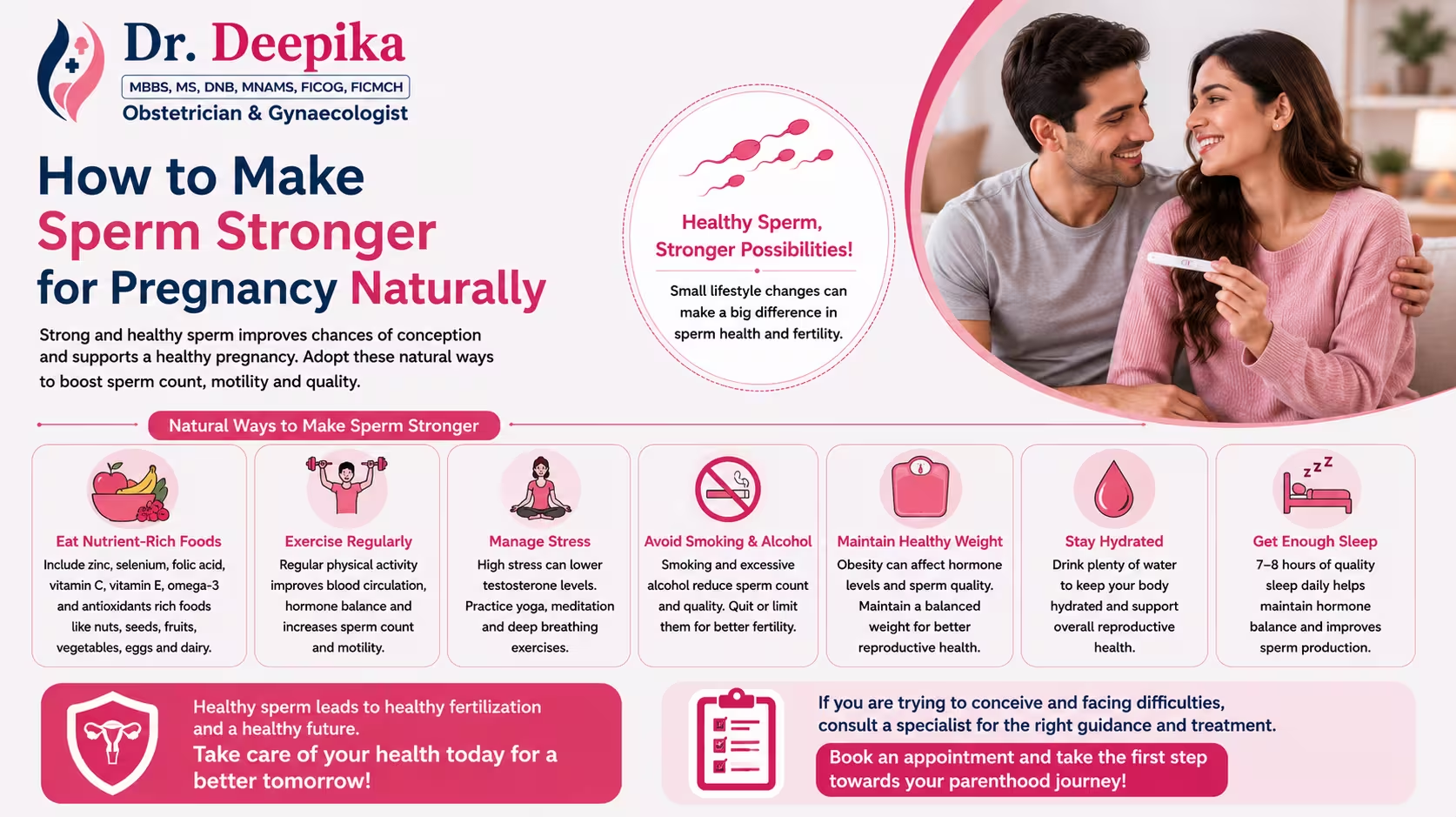
How to Make Sperm Stronger for Pregnancy Naturally?
To make sperm stronger and improve male fertility naturally, focus on eating a nutrient-rich diet, exercising moderately, reducing stress, and avoiding excessive heat or toxins. Because sperm takes roughly 2 to 3 months to fully develop and mature, consistency with these habits is required before seeing improvements on a Mayo Clinic semen analysis.
What Does "Strong Sperm" Actually Mean?
When people ask how to make sperm "stronger," they usually mean improving the overall quality of sperm.
Sperm health is generally evaluated using several parameters:
Sperm Count
This refers to the number of sperm present in a semen sample.
A low sperm count can reduce the chances of sperm reaching and fertilizing an egg.
Sperm Motility
Motility refers to how well sperm move.
Sperm need adequate movement to travel through the female reproductive tract and reach the egg.
Sperm Morphology
Take the First Step Towards Better Women's Health Today
Morphology refers to the size and shape of sperm.
A healthy sperm shape can support its ability to move and participate in fertilization.
Therefore, sperm quality is more than just sperm count.
How to Improve Sperm Health Naturally
1. Eat a Balanced, Nutrient-Rich Diet
A healthy diet provides nutrients needed for overall reproductive health.
Include a variety of:
- Green leafy vegetables
- Fresh fruits
- Whole grains
- Pulses and beans
- Eggs
- Fish
- Nuts and seeds
- Milk or other suitable dairy products
- Healthy sources of protein
A diet rich in vegetables, fruits, whole grains, healthy fats and quality protein can support overall health and may be beneficial for reproductive health.
2. Include Antioxidant-Rich Foods
Oxidative stress can affect sperm cells.
Foods containing antioxidants can form part of a healthy fertility-supportive diet.
Examples include:
- Berries
- Citrus fruits
- Tomatoes
- Spinach
- Broccoli
- Carrots
- Nuts
- Seeds
Rather than relying on one "fertility food," focus on an overall balanced eating pattern.
3. Maintain a Healthy Weight
Take the First Step Towards Better Women's Health Today
Being significantly overweight or obese may be associated with poorer sperm quality and hormonal changes.
If you are overweight, gradual and sustainable weight management may support overall metabolic and reproductive health.
Avoid crash diets or extreme weight-loss programs.
4. Exercise Regularly
Regular moderate physical activity can support:
- Healthy body weight
- Cardiovascular health
- Metabolic health
- Stress management
Activities such as:
- Brisk walking
- Cycling at a comfortable level
- Swimming
- Strength training
- Yoga
can be included in a healthy routine.
However, excessive high-intensity exercise without adequate recovery may not be beneficial.
5. Stop Smoking
Smoking can negatively affect sperm production and sperm quality.
It may affect:
- Sperm count
- Motility
- Morphology
- Sperm DNA
If you smoke and are planning a pregnancy, quitting is one of the most important lifestyle changes you can make for your overall health and reproductive health.
6. Limit Alcohol
Excessive alcohol consumption can affect hormones and male reproductive health.
If you are trying to conceive, reducing or avoiding alcohol is a sensible step.
If you regularly drink heavily, speak with a healthcare professional about a safe approach to reducing or stopping alcohol.
7. Avoid Recreational Drugs
Take the First Step Towards Better Women's Health Today
Certain recreational drugs can negatively affect reproductive hormones and sperm production.
If you are planning a pregnancy, avoid recreational drug use and discuss any concerns with a healthcare professional.
8. Manage Stress
Long-term stress can affect sleep, mood, lifestyle habits and hormonal health.
Stress management may include:
- Meditation
- Deep breathing
- Walking
- Yoga
- Spending time with family
- Hobbies
- Adequate rest
Stress alone is not the cause of every fertility problem, but improving mental well-being can support a healthier lifestyle.
9. Get Enough Sleep
Poor sleep and irregular sleep patterns may be associated with poorer reproductive health.
Try to maintain a regular sleep schedule and aim for adequate sleep each night.
Good sleep also helps support healthy weight, metabolism and stress management.
10. Avoid Excessive Heat Around the Testicles
The testicles need a slightly cooler environment than the body's core temperature for normal sperm production.
Repeated or prolonged exposure to excessive heat may affect sperm production in some men.
Practical steps include:
- Avoiding prolonged hot tubs or very hot baths.
- Taking breaks from activities that cause prolonged heat exposure.
- Avoiding placing laptops directly on the lap for long periods.
- Discussing occupational heat exposure with a doctor if relevant.
This does not mean that normal daily warmth causes infertility.
11. Review Medicines With Your Doctor
Take the First Step Towards Better Women's Health Today
Some medicines can affect male fertility or sperm production.
If you are taking regular medicines and planning a pregnancy, discuss them with your doctor.
Do not stop prescribed medicines on your own.
12. Be Careful With Testosterone and Gym Supplements
This is particularly important for men trying to conceive.
Testosterone therapy can suppress sperm production.
Some bodybuilding or performance-enhancing substances can also interfere with natural testosterone production and sperm production.
If you are using testosterone injections, anabolic steroids or fertility-related supplements, discuss them with a qualified doctor before making changes.
How Long Does It Take to Improve Sperm Health?
Sperm production is a continuous process, and it takes roughly 2–3 months for sperm to develop and mature.
Therefore, lifestyle changes generally need time before their potential effect on sperm quality can be assessed.
Do not expect major changes within a few days.
A doctor may recommend repeating a semen analysis after an appropriate interval if the initial result is abnormal.
Can Certain Foods Increase Sperm Count?
There is no single food that can guarantee an increase in sperm count.
Instead, focus on an overall nutrient-rich diet.
Useful food choices include:
Nuts and Seeds
Take the First Step Towards Better Women's Health Today
Almonds, walnuts, pumpkin seeds and other nuts and seeds provide healthy fats and nutrients.
Eggs
Eggs provide protein and several nutrients that support overall health.
Green Vegetables
Spinach, broccoli and other vegetables provide vitamins, minerals and antioxidants.
Fruits
Citrus fruits, berries and other colorful fruits provide antioxidants and other nutrients.
Fish
Take the First Step Towards Better Women's Health Today
Fatty fish provides omega-3 fatty acids and high-quality protein.
Choose fish that is appropriate for your dietary needs and local food-safety guidance.
Can Exercise Increase Sperm Quality?
Regular moderate exercise may support reproductive health by helping maintain a healthy weight and metabolic health.
However, exercise is not a guaranteed treatment for male infertility.
If a semen analysis shows a significant abnormality, medical evaluation is important rather than relying only on exercise.
Do Supplements Improve Sperm Quality?
You may see many products marketed as "sperm boosters" or "male fertility supplements."
Some supplements contain nutrients such as zinc, selenium, folate, CoQ10 or antioxidants, but evidence for routine supplementation is mixed and depends on the individual.
Taking high doses without medical advice can also be harmful.
Do not assume that a fertility supplement is necessary simply because you are trying to conceive.
If your diet is inadequate or a deficiency is suspected, your doctor can recommend appropriate testing or supplementation.
What Is a Semen Analysis?
A semen analysis is one of the basic tests used to evaluate male fertility.
It can assess factors such as:
- Sperm concentration
- Total sperm number
- Sperm motility
- Sperm morphology
- Semen volume
- Other semen characteristics
If the result is abnormal, doctors may recommend repeating the test because semen parameters can vary between samples.
When Should a Man Get a Fertility Evaluation?
Take the First Step Towards Better Women's Health Today
Consider medical evaluation if:
- Pregnancy has not occurred after 12 months of regular unprotected intercourse.
- The female partner is 35 years or older, in which case evaluation is generally considered earlier.
- There is a history of testicular injury or surgery.
- There is a history of undescended testicles.
- There are erection or ejaculation problems.
- There is a history of sexually transmitted infection or genital infection.
- Testosterone or anabolic steroids are being used.
- A previous semen analysis was abnormal.
Male and female fertility should generally be considered together rather than assuming the problem is only with one partner.
What Medical Conditions Can Affect Sperm Health?
Several conditions can influence sperm production or quality, including:
- Varicocele
- Hormonal disorders
- Testicular problems
- Certain infections
- Genetic conditions
- Diabetes and some chronic illnesses
- Obesity
- Certain medications
- Previous chemotherapy or radiation treatment
If lifestyle changes are not enough, identifying an underlying medical cause can be important.
What Is Varicocele and Can It Affect Sperm?
A varicocele is an enlargement of veins around the testicle.
Some men with varicocele have no symptoms, while others may experience:
- A feeling of heaviness
- Dull scrotal discomfort
- Testicular size differences
- Abnormal semen parameters
If a varicocele is suspected, a urologist or fertility specialist can evaluate whether treatment is appropriate.
Can Poor Sperm Quality Cause Pregnancy Problems?
Yes.
Male factors contribute to a significant proportion of fertility problems.
Poor sperm count, motility or morphology can reduce the likelihood of natural conception.
However, fertility is a couple-level issue. A semen abnormality does not automatically mean that pregnancy is impossible.
The right approach is to evaluate both partners when needed.
Can Sperm Quality Improve Naturally?
Take the First Step Towards Better Women's Health Today
In some men, lifestyle changes can support sperm health, particularly when factors such as smoking, obesity, poor diet, excessive alcohol use, poor sleep or heat exposure are contributing.
However, lifestyle changes cannot correct every cause of male infertility.
If there is a medical condition affecting sperm production, appropriate medical treatment may be required.
When Should You See a Doctor?
Do not rely only on home remedies if:
- Pregnancy has not occurred despite regular attempts.
- A semen analysis is abnormal.
- There is testicular pain or swelling.
- There is a history of testicular surgery or injury.
- There are problems with erection or ejaculation.
- You are taking testosterone or anabolic steroids.
- You have concerns about sperm count or quality.
Early evaluation can help identify the cause and avoid unnecessary delays in fertility treatment.
Expert Guidance for Pregnancy Planning in Jaipur
If you and your partner are planning a pregnancy and are concerned about sperm health, it is important to look beyond "sperm boosters" and focus on the factors that actually influence fertility.
Dr. Deepika, Gynecologist in Jaipur, provides pregnancy planning, preconception counselling, fertility evaluation, PCOS management, pregnancy care and women's health services.
When pregnancy is delayed, evaluation of both partners may be recommended. A semen analysis for the male partner, along with assessment of ovulation and other female fertility factors, can help identify the appropriate next step.
Myths and Facts
Myth: Eating one particular food will dramatically increase sperm count.
Fact: No single food can guarantee improved fertility. Overall diet and lifestyle are more important.
Myth: More sperm always means better fertility.
Fact: Sperm count is important, but motility, morphology and other factors also matter.
Myth: Taking fertility supplements is always safe.
Fact: High-dose or unnecessary supplements can cause problems. Take supplements only when medically appropriate.
Myth: Testosterone injections improve fertility.
Fact: Testosterone therapy can actually suppress natural sperm production in men trying to conceive.
Myth: Sperm health can improve within a few days.
Fact: Sperm development takes weeks, so lifestyle changes generally need time before their effects can be assessed.
Frequently Asked Questions (FAQs)
Take the First Step Towards Better Women's Health Today
1. How can I make sperm stronger naturally?
Focus on a balanced diet, regular moderate exercise, healthy weight, adequate sleep, stress management, avoiding smoking and recreational drugs, and limiting alcohol. If fertility is a concern, consider medical evaluation rather than relying only on lifestyle changes.
2. Which foods are good for sperm health?
A varied diet containing vegetables, fruits, whole grains, pulses, nuts, seeds, eggs, fish and other healthy protein sources can support overall reproductive health.
3. Does drinking more water increase sperm count?
Adequate hydration supports normal body function and semen production, but simply drinking extra water does not guarantee an increase in sperm count.
4. Can exercise improve sperm quality?
Take the First Step Towards Better Women's Health Today
Regular moderate exercise can support healthy weight and overall metabolic health, which may be beneficial for reproductive health. Excessive training, however, may not be helpful.
5. Does smoking affect sperm?
Yes. Smoking can negatively affect sperm count, movement, shape and potentially sperm DNA. Quitting smoking is an important step when planning pregnancy.
6. Does heat affect sperm?
Repeated or prolonged exposure to excessive heat around the testicles may affect sperm production in some men. Avoiding unnecessary prolonged heat exposure may be helpful.
7. How long does it take to improve sperm quality?
Sperm production and maturation take roughly 2–3 months. Therefore, lifestyle improvements generally require several weeks to months before their potential effects can be evaluated.
8. When should a semen analysis be done?
Take the First Step Towards Better Women's Health Today
If pregnancy has not occurred after the recommended period of trying, or if there are known risk factors for male infertility, a doctor may recommend a semen analysis.
9. Can low sperm count be treated?
Treatment depends on the underlying cause. Some cases can improve with lifestyle changes or treatment of an underlying medical condition, while others may require fertility treatment.
10. Can a man with low sperm count still father a child?
Yes. A low sperm count does not automatically mean that natural or assisted conception is impossible. The chances depend on the severity of the problem and the fertility of both partners.
Our Treatments
- Maternity Care
- High Risk Pregnancy
- PCOS Treatment
- Infertility Treatment
- Menstrual Problems Treatment
- Menopause Problems Treatment
Other Blogs
Take the First Step Towards Better Women's Health Today
- 4 Weeks Pregnant hCG Levels
- क्या Thyroid की वजह से Pregnancy में दिक्कत होती है?
- क्या Fallopian Tube Block होने से Pregnancy नहीं होती?
- बांझपन के शुरुआती लक्षण क्या हैं?
- Period Cramps कैसे कम करें?
- पीरियड्स में ज्यादा दर्द क्यों होता है?
Conclusion
If you are wondering "How to make sperm stronger for pregnancy naturally?", start with the basics: eat a balanced diet, maintain a healthy weight, exercise regularly, sleep well, manage stress, avoid smoking and recreational drugs, limit alcohol and avoid unnecessary prolonged heat exposure.
However, there is no single food, supplement or home remedy that can guarantee stronger sperm or pregnancy. Sperm count, motility and morphology all matter, and some fertility problems are caused by medical conditions that require proper treatment.
If pregnancy has been delayed despite regular unprotected intercourse, a semen analysis and evaluation of both partners can help identify the underlying issue and guide the next steps.


