
Book Your Consultation
Bulky Uterus – Symptoms, Causes and Treatments
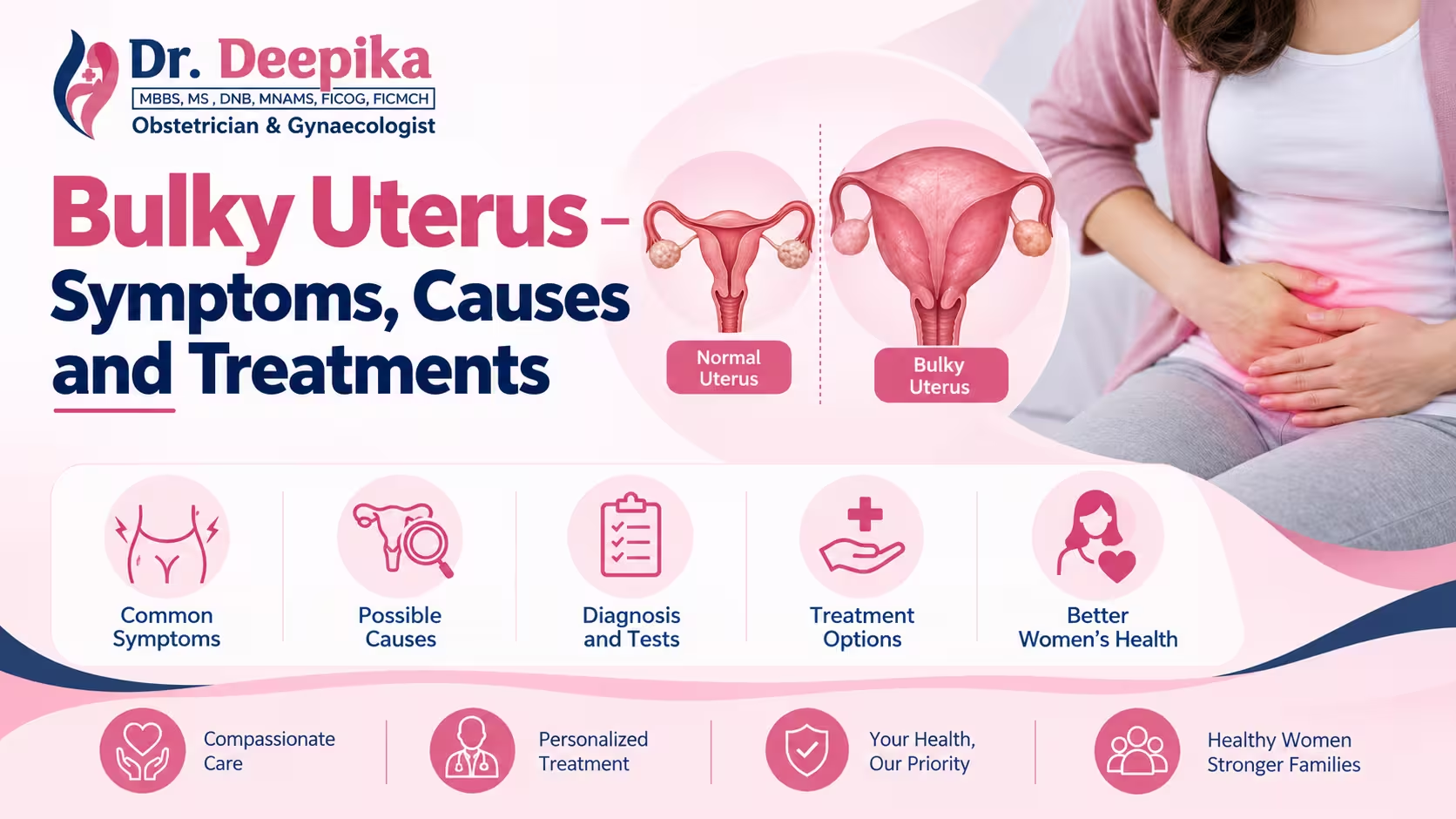
A bulky uterus is a descriptive finding on an ultrasound meaning the uterus is larger than its typical size.
What Is the Normal Size of the Uterus?
The size of the uterus can vary from woman to woman. It is influenced by factors such as:
- Age
- Pregnancy history
- Number of previous pregnancies
- Menstrual and hormonal status
- Menopause
Therefore, there is no single uterus size that is considered normal for every woman.
When an ultrasound report says “bulky uterus,” the finding should be interpreted along with the woman's age, symptoms and other ultrasound details.
What Are the Symptoms of a Bulky Uterus?
Some women with a bulky uterus have no symptoms at all and discover it during a routine ultrasound.
When symptoms occur, they may include:
- Heavy or prolonged periods
- Painful periods
- Pelvic pain or pressure
- Lower abdominal discomfort
- Pain during sexual intercourse
- Frequent urination due to pressure on the bladder
- Constipation or difficulty passing stools in some cases
- Abdominal heaviness or bloating
- Difficulty conceiving in some women
The symptoms depend mainly on why the uterus has become enlarged.
What Causes a Bulky Uterus?
A bulky uterus can have different causes. Some of the most common ones are:
1. Adenomyosis
Take the First Step Towards Better Women's Health Today
Adenomyosis occurs when tissue similar to the lining of the uterus grows into the muscular wall of the uterus.
It can make the uterus enlarged or bulky and may cause:
- Heavy menstrual bleeding
- Severe period pain
- Pelvic pain
- Pain during intercourse
Adenomyosis is a common reason for a bulky uterus on ultrasound.
2. Uterine Fibroids
Fibroids are non-cancerous growths that develop in or around the uterus.
Depending on their size and location, fibroids may cause:
- Heavy periods
- Pelvic pressure
- Abdominal enlargement
- Period pain
- Frequent urination
- Fertility problems in some women
An ultrasound can usually provide important information about the number, size and location of fibroids.
3. Pregnancy
During pregnancy, the uterus naturally increases in size. Therefore, an enlarged or bulky uterus can be a normal finding during pregnancy.
If pregnancy is possible, the ultrasound report should be interpreted according to the stage of pregnancy.
4. Hormonal Changes
Hormonal changes can affect the uterus and may contribute to changes in uterine size, particularly during the reproductive years.
5. Endometriosis
Take the First Step Towards Better Women's Health Today
Endometriosis occurs when tissue similar to the uterine lining grows outside the uterus. In some cases, it can be associated with changes in the uterus or other pelvic structures.
6. Other Uterine Conditions
Less commonly, enlargement can be associated with other uterine abnormalities. If the ultrasound shows an unusual appearance, your Gynecologist may recommend additional tests to determine the exact cause.
Is a Bulky Uterus Dangerous?
A bulky uterus is not necessarily dangerous.
The term describes the size or appearance of the uterus; it does not by itself tell us whether the condition is serious.
For example, a bulky uterus caused by adenomyosis or fibroids is different from an enlarged uterus caused by pregnancy.
What matters most is:
- The underlying cause
- Severity of symptoms
- Ultrasound findings
- Age and reproductive stage
- Whether you are planning pregnancy
That is why a Gynecologist should interpret the ultrasound report rather than relying only on the phrase “bulky uterus.”
How Is a Bulky Uterus Diagnosed?
Diagnosis usually starts with a detailed medical history and pelvic examination when appropriate.
Ultrasound
Take the First Step Towards Better Women's Health Today
Pelvic Ultrasound is commonly used to evaluate the uterus and identify possible causes of enlargement.
It can help assess:
- Uterine size
- Uterine shape
- Endometrial lining
- Fibroids
- Ovaries
- Adenomyosis-related changes
- Other pelvic abnormalities
Depending on the findings, your doctor may recommend a Transvaginal Ultrasound for a more detailed assessment.
MRI
An MRI may sometimes be recommended when ultrasound findings are unclear or when more detailed evaluation of conditions such as adenomyosis or fibroids is needed.
Other Tests
Depending on symptoms, your doctor may also recommend blood tests or other investigations, especially when heavy menstrual bleeding is present.
Bulky Uterus Treatment
There is no single treatment for a bulky uterus. Treatment is based on the underlying cause and the symptoms.
1. Observation
Take the First Step Towards Better Women's Health Today
If the bulky uterus is found incidentally and there are no concerning symptoms, your doctor may recommend observation and follow-up rather than immediate treatment.
2. Medicines
Medicines may be used to manage symptoms such as:
- Heavy menstrual bleeding
- Period pain
- Pelvic discomfort
The type of medicine depends on the cause, symptoms, medical history and whether pregnancy is being planned.
Prescription hormonal treatment may be considered for certain conditions, but it should only be used after medical evaluation.
3. Treatment for Fibroids
If fibroids are responsible for the enlarged uterus, treatment depends on their size, location, symptoms and fertility plans.
Options may include:
- Medicines for symptom control
- Minimally invasive procedures in selected cases
- Myomectomy to remove fibroids
- Other procedures
- Hysterectomy in selected women who have completed their family and require definitive treatment
Not every woman with fibroids needs surgery.
4. Treatment for Adenomyosis
Adenomyosis can often be managed with medicines that control pain and heavy bleeding.
For women with severe symptoms who have completed their family, surgical treatment may sometimes be considered.
5. Surgery
Take the First Step Towards Better Women's Health Today
Surgery is not automatically required for a bulky uterus.
It may be considered when:
- Symptoms are severe
- Fibroids are large or causing significant problems
- Bleeding cannot be controlled with medicines
- There is significant pressure or pain
- Other treatments have not helped
- A specific uterine condition requires surgery
The appropriate procedure depends on the underlying diagnosis.
Can a Bulky Uterus Affect Pregnancy?
A bulky uterus does not automatically mean that you cannot become pregnant.
Many women with an enlarged uterus can conceive naturally.
However, fertility may sometimes be affected by the underlying condition. For example, certain fibroids or severe adenomyosis may interfere with implantation or pregnancy in some women.
If you are trying to conceive, your Gynecologist may evaluate:
- Ovulation
- Ovarian Reserve
- Fallopian Tubes
- Uterine cavity
- Fibroids or adenomyosis
- Partner's Semen Analysis
This helps identify whether the bulky uterus is actually contributing to fertility problems.
Can a Bulky Uterus Cause Infertility?
Not always.
The effect on fertility depends on the cause, severity and location of the uterine abnormality.
For example, some fibroids have little or no effect on fertility, while certain fibroids that affect the uterine cavity may interfere with implantation.
Similarly, adenomyosis may be associated with fertility difficulties in some women.
Therefore, a bulky uterus on an ultrasound should not be considered the direct cause of infertility without further evaluation.
Can a Bulky Uterus Cause Heavy Periods?
Yes, depending on the underlying cause.
Conditions such as adenomyosis and fibroids can cause heavier or longer menstrual bleeding.
If heavy periods are causing weakness, fatigue or symptoms of anemia, medical evaluation is important.
Can a Bulky Uterus Cause Pain?
Take the First Step Towards Better Women's Health Today
Yes. Pelvic pain or painful periods can occur when the bulky uterus is associated with conditions such as adenomyosis or fibroids.
However, pelvic pain can have many causes, so it should not automatically be attributed to a bulky uterus.
When Should You See a Gynecologist?
You should consider consulting a Gynecologist if you have:
- Very heavy periods
- Periods lasting unusually long
- Severe menstrual pain
- Persistent pelvic pain
- Pain during intercourse
- Unexplained abdominal enlargement
- Difficulty conceiving
- Repeated abnormal ultrasound findings
Seek prompt medical attention for very heavy bleeding, severe or sudden pelvic pain, fainting, dizziness or other symptoms that feel urgent.
Bulky Uterus in Jaipur – When to Consult a Gynecologist?
If your ultrasound report mentions “bulky uterus” and you are unsure what it means, it is important to understand the finding in the context of your symptoms and complete ultrasound report.
Dr. Deepika, Best Gynecologist in Jaipur, can evaluate symptoms such as heavy periods, painful periods, pelvic pain, fibroids, adenomyosis and fertility concerns and help determine whether treatment or further investigation is required.
The treatment plan should always be personalized according to the woman's age, symptoms, reproductive goals and medical findings.
Frequently Asked Questions (FAQs)
Does a bulky uterus always need treatment?
Take the First Step Towards Better Women's Health Today
No. If there are no significant symptoms and there is no concerning underlying condition, treatment may not be necessary. Your doctor may simply recommend monitoring.
Can a bulky uterus become normal again?
It depends on the cause. For example, pregnancy-related enlargement naturally changes after delivery, while fibroids or adenomyosis may require specific management.
Is a bulky uterus the same as fibroids?
No. A bulky uterus is a description of an enlarged uterus. Fibroids are one possible cause of uterine enlargement.
Can a bulky uterus cause a miscarriage?
A bulky uterus itself does not automatically cause miscarriage. The risk, if any, depends on the underlying condition, such as the size and location of certain fibroids or the severity of other uterine problems.
Can lifestyle changes cure a bulky uterus?
Take the First Step Towards Better Women's Health Today
Lifestyle changes can support overall reproductive and general health, but they do not directly treat every cause of a bulky uterus. Conditions such as fibroids or adenomyosis may require medical management.
Can a bulky uterus be detected without an ultrasound?
A Gynecologist may suspect uterine enlargement during an examination, but ultrasound is commonly used to confirm uterine size and look for the underlying cause.
Our Treatments
- Maternity Care
- High Risk Pregnancy
- PCOS Treatment
- Infertility Treatment
- Menstrual Problems Treatment
- Menopause Problems Treatment
Other Blogs
- बच्चा कैसे पैदा होता है?
- योनि से दुर्गंध: कारण, निदान, घरेलू उपचार और उपचार
- AMH Test क्या है?
- 1 महीने से पीरियड नहीं आया तो क्या करें?
- AMH Test क्या है?
- Vaginal Yeast Infection
- पीरियड्स खुलकर न होने के लक्षण, कारण और इलाज
Conclusion
Take the First Step Towards Better Women's Health Today
A bulky uterus means that the uterus appears larger than expected, but it is not a diagnosis by itself. Fibroids, adenomyosis, pregnancy and other conditions can cause the uterus to become enlarged.
Treatment depends on the underlying cause and may range from observation and medicines to procedures or surgery in selected cases.
If your ultrasound report mentions a bulky uterus, there is no need to panic. The most important step is to discuss the complete report with a Gynecologist and understand why the uterus is bulky and whether it requires treatment.


