
Book Your Consultation
Vaginal Yeast Infection: Causes, Symptoms, Treatment and Prevention
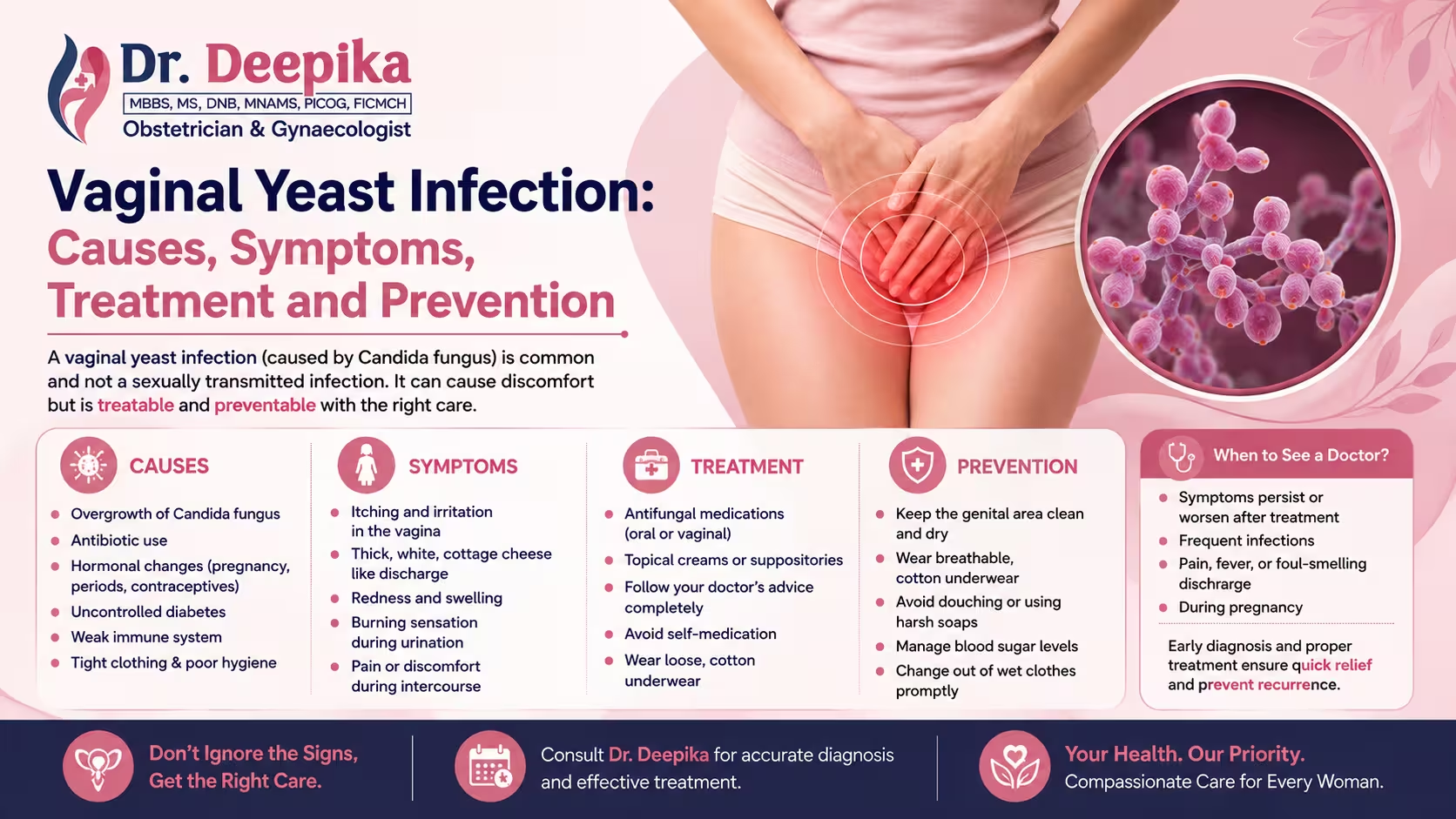
A Vaginal Yeast Infection, also called Vaginal Candidiasis, is a common infection caused by an overgrowth of a type of fungus called Candida.
A small amount of Candida can normally live in the vagina without causing any problems. However, when the natural balance of microorganisms changes, the fungus can multiply and cause symptoms.
Common symptoms include:
- Intense vaginal itching
- Burning or irritation
- Redness or swelling around the vagina
- Thick white vaginal discharge
- Soreness
- Burning while urinating, especially when urine touches irritated skin
- Discomfort during sexual intercourse
Vaginal yeast infection is treatable, but its symptoms can sometimes look similar to other vaginal infections. Therefore, repeated self-treatment without knowing the actual cause is not recommended.
What Causes Vaginal Yeast Infection?
The main cause is an overgrowth of Candida in the vagina.
Several factors can increase the likelihood of developing a yeast infection.
Antibiotic Use
Antibiotics can reduce some of the normal bacteria that help maintain the vaginal environment. This may allow Candida to grow more easily.
Not every woman taking antibiotics develops a yeast infection, but the risk can increase in some cases.
Pregnancy
Hormonal changes during pregnancy can alter the vaginal environment and may increase the likelihood of yeast overgrowth.
Pregnant women with vaginal itching, unusual discharge or burning should consult their Gynecologist before taking any medicine.
High Blood Sugar
Take the First Step Towards Better Women's Health Today
Poorly controlled blood sugar can increase the risk of recurrent yeast infections.
Women with frequent yeast infections may sometimes need evaluation for conditions that affect blood sugar, especially when other risk factors are present.
Hormonal Changes
Changes in estrogen levels can influence the vaginal environment. Some women may experience yeast infections around certain hormonal changes or while using certain hormonal medicines.
Weakened Immune System
A weakened immune system can make it more difficult for the body to control Candida overgrowth.
Warm and Moist Environment
Prolonged moisture around the genital area can create an environment in which fungal growth may be more likely.
For example:
- Staying in wet clothes for a long time
- Wearing sweaty clothes for extended periods
- Wearing very tight, non-breathable clothing
may contribute to irritation and discomfort.
Is Vaginal Yeast Infection an STI?
Take the First Step Towards Better Women's Health Today
No. Vaginal yeast infection is not generally considered a Sexually Transmitted Infection (STI).
It usually develops because of an imbalance or overgrowth of Candida rather than sexual transmission.
However, vaginal symptoms after sexual activity can also be caused by an STI or another vaginal infection. If symptoms are unusual, persistent or recurrent, a proper evaluation is important.
What Are the Symptoms of Vaginal Yeast Infection?
Symptoms can vary from mild to severe.
Intense Vaginal Itching
Itching is one of the most common symptoms.
It may affect the vaginal opening and the surrounding vulval skin.
Burning and Irritation
You may experience burning, soreness or irritation, particularly while urinating or after sexual intercourse.
Thick White Discharge
Take the First Step Towards Better Women's Health Today
A yeast infection may cause thick, white discharge that can sometimes look clumpy.
However, vaginal discharge can vary naturally, and not every white discharge means a yeast infection.
Redness and Swelling
The vulval area may become red, swollen or sensitive.
Pain During Sex
Inflammation and irritation may cause discomfort or pain during sexual intercourse.
Burning During Urination
Some women experience burning when urinating because urine comes into contact with irritated external skin.
If burning during urination is severe or occurs without vaginal irritation, a urinary tract infection or another condition should also be considered.
Does Vaginal Yeast Infection Cause Bad Smell?
Take the First Step Towards Better Women's Health Today
A strong or fishy vaginal smell is not typical of a yeast infection.
If you have significant vaginal odour along with discharge, it may be caused by another condition, such as Bacterial Vaginosis (BV) or an STI.
This is one reason why it is not a good idea to diagnose yourself based only on discharge.
How Is Vaginal Yeast Infection Diagnosed?
A Gynecologist may diagnose a yeast infection based on your symptoms and examination.
Depending on the situation, additional testing may be recommended.
Medical History
Your doctor may ask about:
- Your symptoms
- How long you have had them
- Previous vaginal infections
- Recent antibiotic use
- Pregnancy
- Diabetes or blood sugar problems
- Current medicines
- Whether the infection keeps coming back
Physical Examination
The external genital area and vagina may be examined for signs of:
- Redness
- Swelling
- Irritation
- Abnormal discharge
Vaginal Swab
Take the First Step Towards Better Women's Health Today
A sample of vaginal discharge may be collected when the diagnosis is unclear, symptoms are recurrent or treatment has not worked as expected.
Laboratory testing can help identify Candida and distinguish it from other causes of vaginal symptoms.
How Is Vaginal Yeast Infection Treated?
Treatment depends on the severity of the infection, whether it is a first or recurrent infection, pregnancy status and other individual factors.
Antifungal Medicines
Yeast infections are treated with antifungal medicines.
These may be available as:
- Vaginal creams
- Vaginal tablets or suppositories
- Oral medicines in selected situations
The choice of treatment depends on the individual case.
Do not take oral antifungal medicine without medical advice, particularly if you are pregnant or trying to conceive.
Treatment During Pregnancy
Pregnant women should not self-medicate for suspected yeast infection.
The choice of antifungal treatment during pregnancy can be different from treatment used in non-pregnant women.
Consult your Gynecologist for an appropriate and pregnancy-safe treatment plan.
How Long Does a Vaginal Yeast Infection Take to Improve?
Take the First Step Towards Better Women's Health Today
Symptoms often begin to improve after appropriate treatment, but the time required can vary.
It is important to complete the treatment as advised even if symptoms improve earlier.
If symptoms do not improve after treatment or return soon afterward, you may need another evaluation.
The problem may be:
- A different type of Candida
- Another vaginal infection
- An incorrect initial diagnosis
- Recurrent candidiasis
- An underlying health condition
Can Vaginal Yeast Infection Go Away on Its Own?
Mild symptoms may sometimes improve, but it is difficult to know whether the symptoms are actually caused by a yeast infection without proper evaluation.
Many vaginal conditions can cause similar symptoms.
For example, itching or discharge can also occur with:
- Bacterial Vaginosis
- Trichomoniasis
- Other STIs
- Skin conditions
- Irritation from personal care products
If symptoms are persistent or severe, medical evaluation is better than repeatedly trying different treatments.
What Can You Do at Home for Relief?
Home care cannot replace antifungal treatment when an infection is present, but certain habits may reduce irritation.
Keep the Area Dry
After bathing or exercising, gently dry the external genital area.
Wear Breathable Underwear
Take the First Step Towards Better Women's Health Today
Cotton or other breathable underwear can help reduce moisture.
Change Out of Wet Clothes
Change wet swimwear or sweaty workout clothes as soon as reasonably possible.
Avoid Irritating Products
Avoid heavily fragranced:
- Soaps
- Intimate washes
- Sprays
- Deodorants
- Bubble baths
These products can irritate sensitive genital skin.
Keep Cleansing Gentle
The vagina is self-cleaning. There is generally no need to wash inside the vagina.
Clean the external vulval area gently with water or a mild, non-irritating product if recommended.
Can Yogurt Cure Vaginal Yeast Infection?
Take the First Step Towards Better Women's Health Today
You may come across advice suggesting that yogurt should be applied inside the vagina to treat yeast infection.
This is not a recommended substitute for proven antifungal treatment.
Putting food products or homemade mixtures inside the vagina can cause irritation and may make symptoms more difficult to manage.
If you have symptoms of yeast infection, proper diagnosis and appropriate treatment are safer options.
Can Garlic Cure Vaginal Yeast Infection?
Garlic is sometimes promoted online as a natural treatment for vaginal yeast infection.
However, inserting garlic or other substances into the vagina is not recommended. It can irritate or damage sensitive vaginal tissue.
Do not use home remedies inside the vagina without medical advice.
Can Baking Soda Treat Vaginal Yeast Infection?
Baking soda is another home remedy sometimes suggested online.
There is no reason to put baking soda inside the vagina to treat a suspected yeast infection.
Changing the vaginal environment with homemade mixtures can cause irritation and may interfere with the normal vaginal balance.
Can Vaginal Yeast Infection Be Prevented?
There is no guaranteed way to prevent every yeast infection, but some habits may help reduce irritation and moisture.
Avoid Unnecessary Antibiotics
Take the First Step Towards Better Women's Health Today
Take antibiotics only when prescribed or recommended by a qualified healthcare professional.
Keep the Genital Area Dry
Avoid staying in wet or sweaty clothing for long periods.
Avoid Douching
Douching can disturb the natural vaginal environment and is not recommended for routine vaginal hygiene.
Avoid Fragranced Products
Perfumed sprays, washes and other products may irritate the vulval area.
Manage Blood Sugar
Take the First Step Towards Better Women's Health Today
If you have diabetes, keeping blood sugar under appropriate control is important for overall health and may help reduce the risk of recurrent infections.
Can Vaginal Yeast Infection Keep Coming Back?
Yes.
Some women experience Recurrent Vaginal Candidiasis, meaning yeast infections happen repeatedly over a period of time.
Recurrent infections should not simply be treated with repeated over-the-counter medicines without evaluation.
Your doctor may consider:
- Confirming the diagnosis
- Identifying the Candida species
- Checking for contributing medical conditions
- Reviewing recent antibiotic use
- Considering a longer treatment plan when appropriate
Why Does Yeast Infection Keep Coming Back?
Recurrent yeast infection can have several possible reasons.
These may include:
- Frequent antibiotic use
- Diabetes or poorly controlled blood sugar
- Hormonal factors
- Certain medicines
- Immune system problems
- A Candida species that responds differently to standard treatment
- Incorrect diagnosis
Sometimes what appears to be recurrent yeast infection is actually another condition causing similar symptoms.
Can Yeast Infection Affect Pregnancy?
A vaginal yeast infection generally does not mean that a woman cannot become pregnant.
However, if you are planning pregnancy and have persistent vaginal symptoms, it is better to get them evaluated.
If you are already pregnant, consult your Gynecologist before taking any medicine.
Can Vaginal Yeast Infection Cause Infertility?
Take the First Step Towards Better Women's Health Today
A typical vaginal yeast infection is not considered a direct cause of infertility.
However, persistent vaginal symptoms should not be ignored because not every infection or condition causing discharge and irritation is a yeast infection.
Certain untreated reproductive tract infections, particularly some STIs, can affect fertility.
This is why accurate diagnosis is important.
Can Your Partner Get a Yeast Infection?
Vaginal yeast infection is not usually considered an STI, and routine treatment of an asymptomatic male partner is generally not required.
However, a sexual partner who develops symptoms such as penile redness, itching or irritation should consult a healthcare professional.
Should You Avoid Sex During a Yeast Infection?
Sexual intercourse may worsen irritation and discomfort while the vagina and vulval skin are inflamed.
It may be more comfortable to avoid sexual activity until symptoms improve.
Also remember that some vaginal antifungal creams can affect certain barrier contraceptives. Check the product instructions or ask your healthcare professional if you are using condoms or diaphragms.
When Should You See a Gynecologist?
Consult a Gynecologist if:
- This is your first suspected yeast infection.
- Symptoms are severe.
- You are pregnant.
- Symptoms do not improve after treatment.
- Symptoms return frequently.
- You have unusual vaginal bleeding.
- You have pelvic pain.
- You have fever.
- You have a strong or fishy vaginal smell.
- Your discharge is yellow or green.
- You may have been exposed to an STI.
- You have diabetes or a weakened immune system.
Vaginal Yeast Infection Treatment in Jaipur
Take the First Step Towards Better Women's Health Today
If you are experiencing vaginal itching, burning, abnormal discharge, redness or repeated vaginal infections, getting the correct diagnosis is important before starting treatment.
Dr. Deepika, Best Gynecologist in Jaipur, provides personalized care for Vaginal Infections, Abnormal Vaginal Discharge, Period Problems, PCOS, Pregnancy Planning and other women's health concerns.
During a consultation, your symptoms and medical history can be assessed, and a vaginal examination or laboratory testing may be recommended when needed.
The goal is to identify the actual cause of your symptoms and choose an appropriate treatment rather than repeatedly treating yourself for a suspected yeast infection.
Frequently Asked Questions
What is a vaginal yeast infection?
A vaginal yeast infection is an overgrowth of Candida fungus in the vagina. It commonly causes itching, burning, irritation and thick white discharge.
What are the most common symptoms of vaginal yeast infection?
Common symptoms include intense itching, burning, redness, swelling, soreness and thick white discharge. Some women may also experience pain during sex or burning while urinating.
Does vaginal yeast infection cause a fishy smell?
Take the First Step Towards Better Women's Health Today
A strong fishy smell is not typical of yeast infection. It may suggest another condition such as Bacterial Vaginosis or an STI.
Is vaginal yeast infection an STI?
No. Vaginal yeast infection is not generally considered a Sexually Transmitted Infection. It usually results from an overgrowth of Candida that is already present in the body.
Can antibiotics cause yeast infection?
Yes. Antibiotics can alter the normal bacterial balance in the vagina, which may allow Candida to multiply in some women.
Can pregnancy cause vaginal yeast infection?
Hormonal changes during pregnancy can increase the likelihood of yeast overgrowth in some women.
Can I treat a yeast infection myself?
Take the First Step Towards Better Women's Health Today
It is better to confirm the cause, especially if it is your first infection, symptoms are severe or infections keep returning. Similar symptoms can occur with other vaginal conditions.
Can yogurt cure vaginal yeast infection?
Yogurt should not be considered a proven treatment for vaginal yeast infection, and it should not be inserted into the vagina.
Can garlic treat vaginal yeast infection?
No. Inserting garlic into the vagina can cause irritation or tissue damage and is not recommended.
How is vaginal yeast infection treated?
Treatment generally involves antifungal medicines. The appropriate medicine and duration depend on the individual's symptoms, medical history and circumstances.
Can I take oral antifungal medicine during pregnancy?
Take the First Step Towards Better Women's Health Today
Do not take oral antifungal medicine during pregnancy without medical advice. Your Gynecologist can recommend an appropriate treatment option.
Can vaginal yeast infection affect fertility?
A typical vaginal yeast infection is not considered a direct cause of infertility. However, persistent vaginal symptoms should be evaluated because other infections can cause similar symptoms.
Why does my yeast infection keep coming back?
Repeated infections can be associated with antibiotic use, diabetes, hormonal factors, immune problems or certain Candida species. Sometimes the symptoms are caused by another condition rather than yeast infection.
How can I prevent vaginal yeast infection?
Avoid unnecessary antibiotics, keep the external genital area dry, change out of wet clothing, avoid douching and avoid fragranced products that irritate the genital area.
When should I see a Gynecologist for a yeast infection?
Take the First Step Towards Better Women's Health Today
See a Gynecologist if symptoms are severe, recurrent, do not improve with treatment, occur during pregnancy or are accompanied by pelvic pain, fever, unusual bleeding or a strong vaginal odour.
Our Treatments
- Maternity Care
- High Risk Pregnancy
- PCOS Treatment
- Infertility Treatment
- Menstrual Problems Treatment
- Menopause Problems Treatment
Other Blogs
- बच्चा कैसे पैदा होता है?
- PCOS Diet Plan: Food to Eat and Avoid in PCOS
- Period Delay Tablets: Myths vs Facts
- 1 महीने से पीरियड नहीं आया तो क्या करें?
- AMH Test क्या है?
- गर्भावस्था के दौरान पेट दर्द
- पीरियड्स खुलकर न होने के लक्षण, कारण और इलाज
Conclusion
Vaginal yeast infection is a common and treatable condition, but not every case of vaginal itching or discharge is caused by yeast.
Typical symptoms include intense itching, burning, redness, soreness and thick white discharge. A strong fishy smell, green or yellow discharge, pelvic pain or fever may point toward another condition and should be evaluated.
Avoid putting yogurt, garlic, baking soda or other homemade mixtures inside the vagina. These remedies can irritate sensitive tissue and should not replace appropriate medical treatment.
If symptoms are severe, keep returning or do not improve after treatment, a Gynecological evaluation can help confirm the diagnosis and identify the right treatment.
For women in Jaipur looking for personalized care for Vaginal Yeast Infection, Vaginal Discharge, PCOS, Period Problems or other Women's Health concerns, Dr. Deepika, Best Gynecologist in Jaipur, can provide appropriate evaluation and guidance.


